
Dullness and surface scratches
Honing and progressive diamond refinement may reduce wear and prepare the surface for a consistent finish. The required depth of treatment is assessed before work starts.
Repair. Refine. Restore.
Bring a worn terrazzo floor back into use with a treatment plan built around its condition. We assess damage, repair suitable defects and refine the surface to an agreed finish.
Period entrance halls, communal floors and commercial spaces across London.
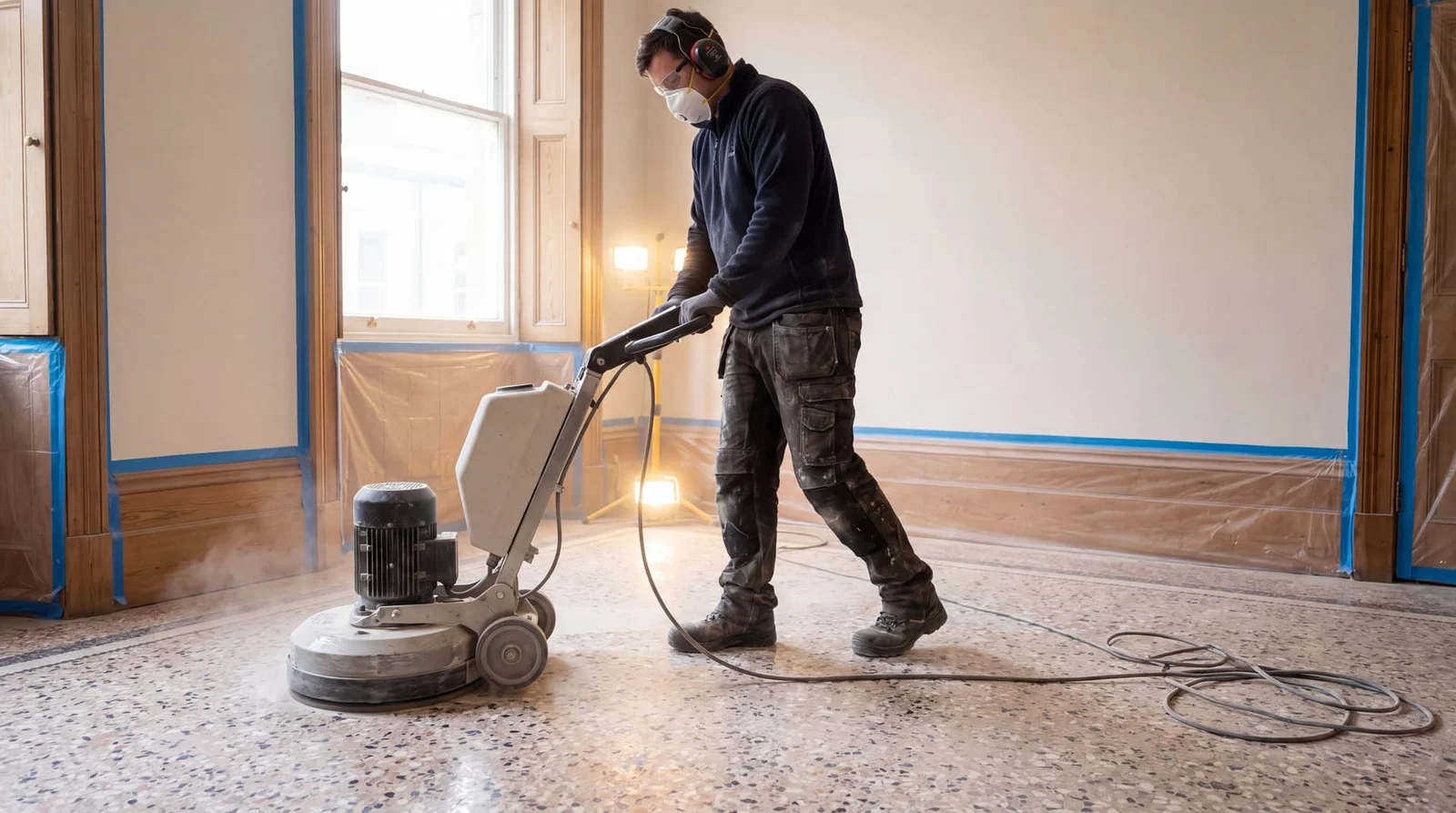
The right treatment for your floor
Terrazzo restoration is for floors that need more than a thorough clean: scratches that catch the light, chipped edges, damaged patches or a finish worn away by years of use. Marble & Stone Polishing assesses the whole floor before recommending repairs, diamond grinding, honing or polishing.
The first decision is whether the floor is sound enough to restore. We look at the binder, aggregate, existing finish, cracks and previous repairs. Cement-based terrazzo and resin-based systems can need different treatment; a test area helps establish a suitable method and a realistic finish.
Original borders and changes of colour deserve particular care. The aim is to retain the floor’s character while improving its condition. We explain any limits to stain removal, repair blending and finish consistency before the work is agreed.

Understand the condition
The scope follows the damage. A sound floor with surface wear may need a different approach from one with loose sections or moving cracks.
Honing and progressive diamond refinement may reduce wear and prepare the surface for a consistent finish. The required depth of treatment is assessed before work starts.
Suitable local defects can be filled before the surrounding surface is refined. Aggregate size, binder colour and the age of the original terrazzo affect how closely a repair can blend.
We distinguish a stable defect from a crack that may be linked to ongoing movement. Covering a moving crack is not a lasting solution; its cause may need further investigation first.
Previous finishes and adhesive residues are assessed and tested before removal. If the history of an old floor covering or adhesive is unknown, specialist checks may be needed before disturbance.
An exposed area can help reveal the condition of a concealed floor. Photos and an inspection are needed before assuming that the whole surface is suitable for recovery.
Some marks are on the surface; others penetrate the binder or aggregate. We discuss likely improvement after assessment, without promising that every stain will disappear.
Cleaning, polishing or restoration?
These treatments solve different problems. If you are unsure, photographs and an assessment help identify the right starting point.
| What you notice | Likely starting point | What to expect |
|---|---|---|
| Dirt, traffic marks or a residue film | Terrazzo cleaning | Compatible cleaning and residue removal; physical wear may remain. |
| A worn finish or fine surface scratches | Terrazzo floor polishing | Assessment for honing and progressive finish refinement. |
| Chips, cracks, damaged areas or more extensive wear | Terrazzo restoration | A wider scope that may include suitable repairs and surface correction. |
A clear scope before work begins
Send your postcode, photographs, approximate area and details of the damage. An inspection or test area may be needed to confirm the floor type, repair scope and achievable finish.
We agree access, protection of adjoining finishes and the treatment sequence. For occupied premises, tell us about furniture, opening hours and routes that need to remain usable.
Suitable defects are repaired and allowed to cure as required. Grinding or honing is selected only where the floor condition and construction permit it.
Progressive refinement develops the agreed appearance. A natural honed finish and a more reflective polished finish have different visual effects; a sample helps set expectations.
Sealing is assessed against the terrazzo system and selected finish. We explain drying or curing requirements, when the floor can be used and how to maintain it.
Treatment, finish and timescale are confirmed after assessment. No two terrazzo floors respond in exactly the same way.
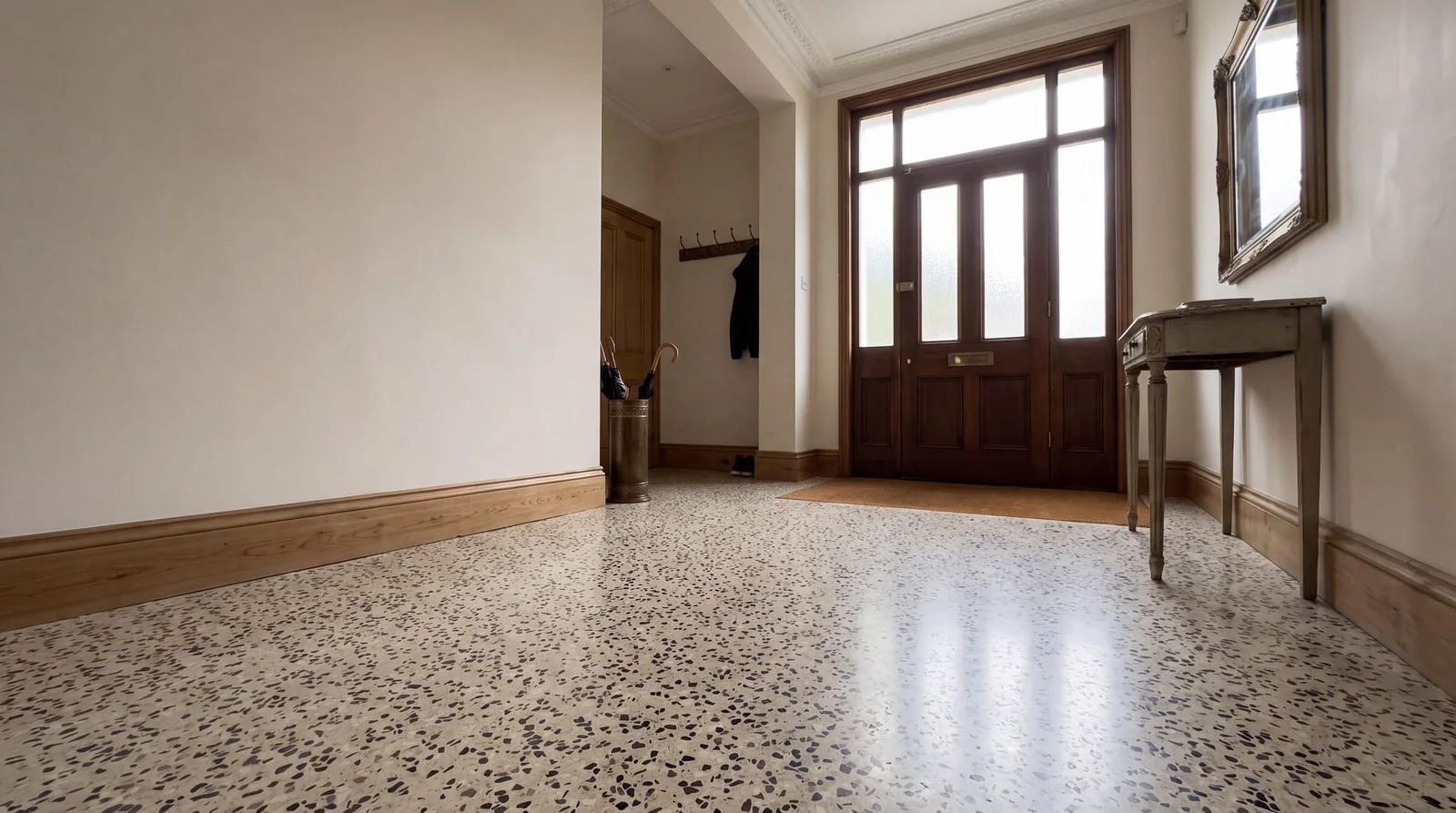
Homes & commercial spaces
London terrazzo appears in entrance halls, apartment buildings, shops, reception areas and public interiors. Restoring a period floor often means balancing the overall finish with existing borders, older infill and the natural variation of the original material.
For communal or commercial floors, let us know about pedestrian traffic, lift access, site rules and available working hours. We can assess the practical scope and discuss sequencing before a programme is agreed. A finish should suit how the space is used as well as how it looks.
If the property has conservation requirements, provide any relevant specifications before treatment is selected. A trial area and an agreed scope are especially useful when the original fabric must be retained.
A quote based on the actual floor
A restoration quote depends on the floor area, condition, number and depth of repairs, existing coatings, access and the finish required. A small damaged hallway can involve more detailed work per square metre than an open, sound floor. Photographs help start the conversation; a site assessment may be needed for a reliable written scope and quotation.
Discuss your floorRemove loose grit regularly and use the cleaning method recommended for the floor and its finish. Wipe up spills promptly and avoid experimenting with acids, abrasive pads or unapproved coatings. We explain the appropriate cleaning routine and any protection needs at handover.
For a wider range of surfaces, explore our floor polishing services or marble and stone services.
London coverage
We serve residential and commercial properties across Greater London, including central London, Westminster, Kensington, Chelsea, Camden, Islington, the City of London and surrounding boroughs. Send your postcode to confirm arrangements for your property.
For your assessment, include the approximate floor area, photographs, property use and any parking, access or working-hour restrictions.
Useful answers before you book
Often, but the answer depends on its condition and construction. Surface wear and stable local damage may be treatable. Loose areas, significant movement or deep contamination need assessment before a restoration plan is agreed.
Yes. Cleaning targets dirt and residues. Polishing refines a suitable surface to an agreed finish. Restoration may bring these together with repairs, coating removal, grinding or honing when the floor needs more substantial work.
An exact invisible match cannot be guaranteed. The original aggregate, binder colour, age and surrounding finish affect the result. We discuss the expected appearance and assess whether movement could affect a repair.
We can assess an exposed floor and any remaining adhesive or covering. Its condition and the history of the materials must be checked before removal or grinding is specified. Please send photographs before attempting to strip it yourself.
No single treatment removes every stain. Depth, age, previous chemicals and the floor’s composition affect what is possible. We assess the mark and explain likely improvement before work.
Timing depends on the area, repair work, treatment stages and any curing or drying requirements. Access and phasing can also affect the programme. We confirm the proposed schedule once the scope is clear.
No. A honed or more reflective finish may be suitable, depending on the floor and intended use. We discuss the appearance and maintenance implications and can use a sample area to agree the target.
Please provide the London postcode, approximate area, wide photographs, close-ups of damage, the property type and any access restrictions. Mention previous coatings or treatments if known.
Your next step
Tell us about the damage, the age of the floor if known and the finish you have in mind. Include wide photographs and close-ups of cracks, chips or stains.
We will advise on the assessment needed and the appropriate service before a treatment is agreed.