
Embedded dirt and traffic lanes
We assess the build-up in entrances, corridors and frequently used areas. Compatible products and agitation can help release soil that routine mopping has left behind.
A cleaner floor. A considered approach.
Lift accumulated dirt and residues with professional terrazzo cleaning matched to your floor. We assess the surface first and explain when cleaning is enough and when wear needs a different treatment.
For entrance halls, communal areas, homes and business premises in London.
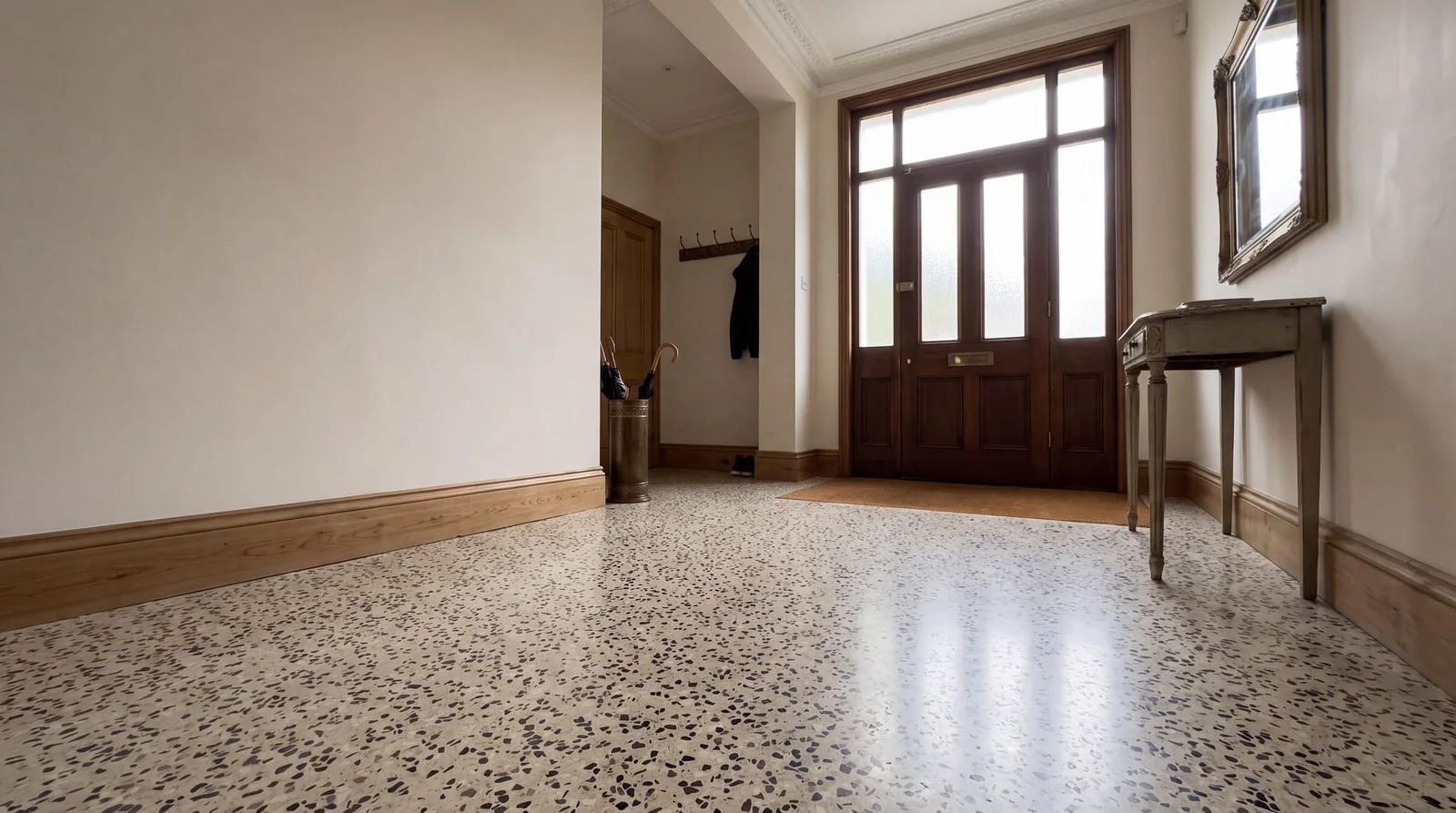
The right treatment for your floor
Busy entrances and shared corridors collect grit, tracked-in soil and cleaning-product residue. Over time, terrazzo can look grey, patchy or greasy even after routine mopping. A specialist assessment helps distinguish a dirty surface from scratches, etching or a worn finish.
Our terrazzo cleaning service focuses on removing soiling with a compatible cleaning system, controlled agitation and effective removal of dirty solution. The floor’s binder, aggregate, existing sealer or coating and surrounding materials all influence the method.
Cleaning does not replace missing material or polish away deep scratches. If a test area shows that the main issue is wear or damage, we explain the appropriate next step before extending the work.
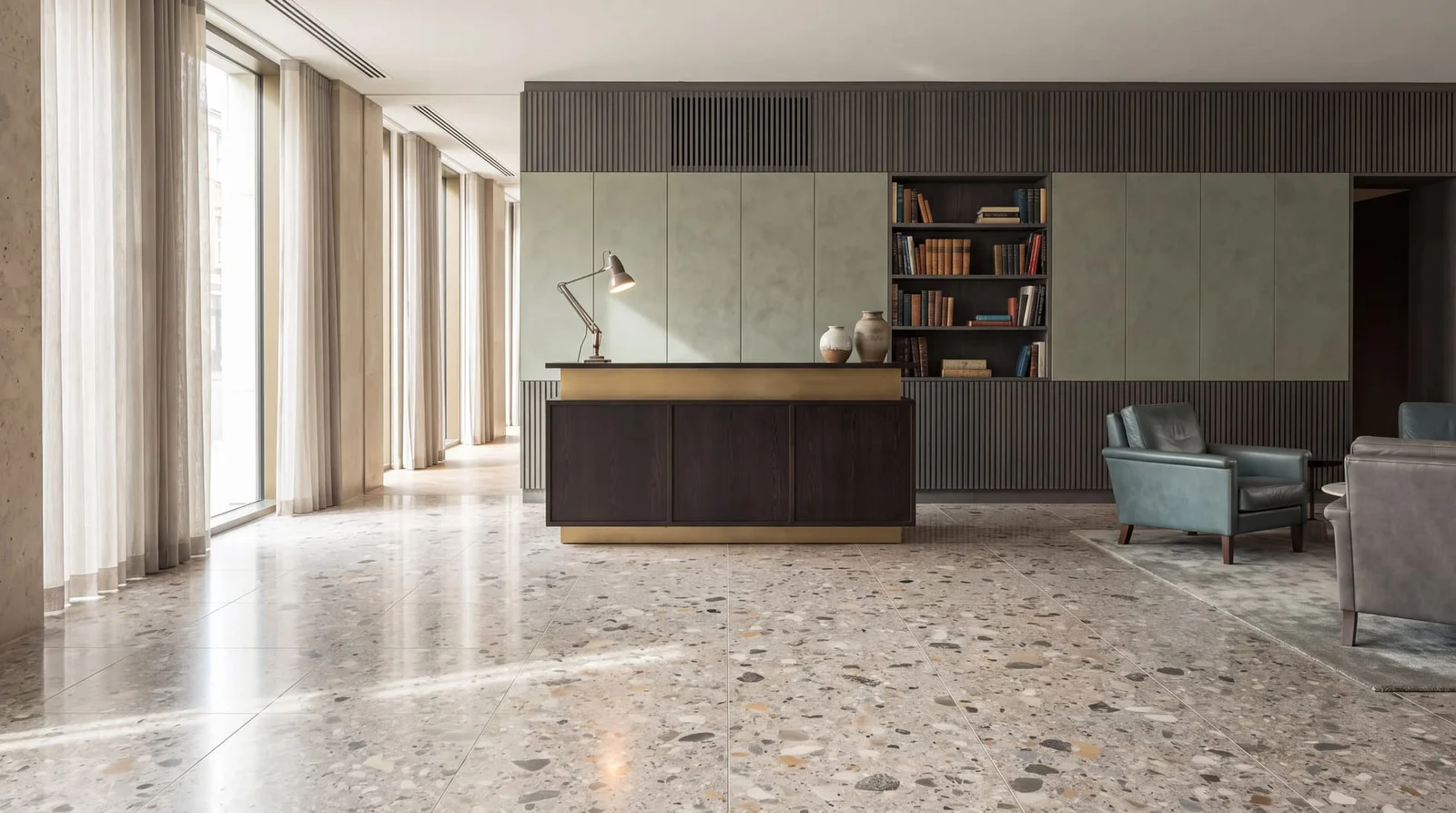
Understand the condition
A clear diagnosis avoids applying the wrong treatment to a floor that needs something more specific.
We assess the build-up in entrances, corridors and frequently used areas. Compatible products and agitation can help release soil that routine mopping has left behind.
Excess product, dirty water or incomplete rinsing can leave a film. Removing that residue and reviewing the maintenance routine may improve the appearance of a sound floor.
Stripping a coating is a separate treatment decision. We identify and test existing finishes before proposing removal, because an unsuitable stripper can affect the terrazzo or surrounding surfaces.
Corners, edges and changes of material need attention as well as the open floor. The cleaning plan accounts for adjoining skirting, metal strips and other sensitive finishes.
Fresh surface contamination may respond differently from a mark that has penetrated the terrazzo. Tell us what caused a stain and what has already been used on it.
If the surface is clean but lacks clarity, the finish may be worn. Honing or polishing may be appropriate; additional cleaning alone will not correct physical wear.
Cleaning, polishing or restoration?
These treatments solve different problems. If you are unsure, photographs and an assessment help identify the right starting point.
| What you notice | Likely starting point | What to expect |
|---|---|---|
| Dirt, traffic marks or a residue film | Terrazzo cleaning | Compatible cleaning and residue removal; physical wear may remain. |
| A worn finish or fine surface scratches | Terrazzo floor polishing | Assessment for honing and progressive finish refinement. |
| Chips, cracks, damaged areas or more extensive wear | Terrazzo restoration | A wider scope that may include suitable repairs and surface correction. |
A clear scope before work begins
We ask about the surface, existing products, coatings and use of the space. Photos and, where needed, a test area help establish the scope.
Dry soil is removed first and adjoining finishes are considered. Moving loose furniture and planning access helps the cleaning cover the intended area.
Product, dilution, contact time and agitation are chosen for the floor and soiling. More chemical or a more aggressive pad is not automatically a better treatment.
Dirty solution is removed and the surface is rinsed as appropriate for the system. Once sufficiently dry, the result can be assessed without a film of moisture disguising remaining marks.
We assess whether further treatment or suitable protection is needed. Advice covers cleaning products, dosage, equipment and the frequency appropriate to footfall.
Treatment, finish and timescale are confirmed after assessment. No two terrazzo floors respond in exactly the same way.
Homes & commercial spaces
For a home, the useful starting point is often the entrance hall or the area where marks keep returning. Tell us whether the terrazzo is a tile or an in-situ floor, if known, and send a wide photograph as well as a close-up of the affected surface.
For property managers and businesses, include the approximate area, peak footfall, opening hours and any restrictions on water, power or access. We discuss workable sequencing and when the treated floor can return to use.
A repeat maintenance schedule should follow the floor’s condition and usage. Entrance matting, regular grit removal and correct product dilution can be as important to appearance as the occasional deep clean.
A quote based on the actual floor
The quote reflects the area, level of soiling, existing coatings, edge work, access and any protection specified. Removing an old coating or treating a particular stain can change the scope. Send the postcode and photographs for an initial assessment; we confirm any additional treatment before it is included.
Discuss your floorRemove dry grit with suitable equipment, use a cleaner approved for your terrazzo and finish, follow the product dilution and change dirty cleaning water. Wipe up spills promptly. Avoid vinegar, acid-based descalers and unapproved abrasive products; they can damage marble aggregate or the surface finish.
For a wider range of surfaces, explore our floor polishing services or marble and stone services.
London coverage
We serve residential and commercial properties across Greater London, including central London, Westminster, Kensington, Chelsea, Camden, Islington, the City of London and surrounding boroughs. Send your postcode to confirm arrangements for your property.
For your assessment, include the approximate floor area, photographs, property use and any parking, access or working-hour restrictions.
Useful answers before you book
Cleaning removes soil and residues. It will not fill a scratch or mechanically refine the surface. Where visible scratches remain after cleaning, we can assess whether honing, polishing or more extensive restoration is appropriate.
An existing coating needs to be assessed and tested first. If removal is suitable, it is included as a defined part of the scope with a compatible method. Do not assume a general-purpose stripper is safe for every terrazzo system.
Vinegar and other acidic products can affect marble aggregate and cement-based materials. Use a cleaner compatible with the particular terrazzo and its finish, following the manufacturer’s instructions and the aftercare advice provided.
Possible causes include retained dirt, excess product, uneven coating, staining or surface wear. These need different responses. An assessment or test clean helps identify which is responsible.
It depends on the terrazzo system and its existing finish. Sealing is not automatically required after every clean. We assess suitability and explain any preparation, drying or curing requirements before recommending protection.
There is no single interval for every floor. Footfall, entrance matting, the cleaning routine and the condition of the finish all matter. We can advise after assessing the space.
We assess entrance areas, corridors, reception spaces and other terrazzo floors in London properties. Please provide access arrangements, working-hour restrictions and the area so the work can be scoped appropriately.
This depends on the cleaning method and any additional protection. We provide advice for the agreed treatment; wet surfaces and uncured products must be kept out of use until ready.
Your next step
Tell us where the dirt or marks appear, what products are currently used and whether the floor has a coating. Add your postcode, approximate area and photographs.
We will advise on the assessment needed and the appropriate service before a treatment is agreed.