
Dull and tired surfaces
When the floor is sound but its finish has worn, honing and polishing can be assessed as a way to improve clarity. We check for residues and coatings that may be masking the surface first.
Restore clarity to the finish.
Refine a dull terrazzo surface and reveal more of its colour and aggregate. We assess the floor, discuss the finish you want and specify suitable honing and polishing stages.
Terrazzo polishing for London homes, communal areas and commercial interiors.
The right treatment for your floor
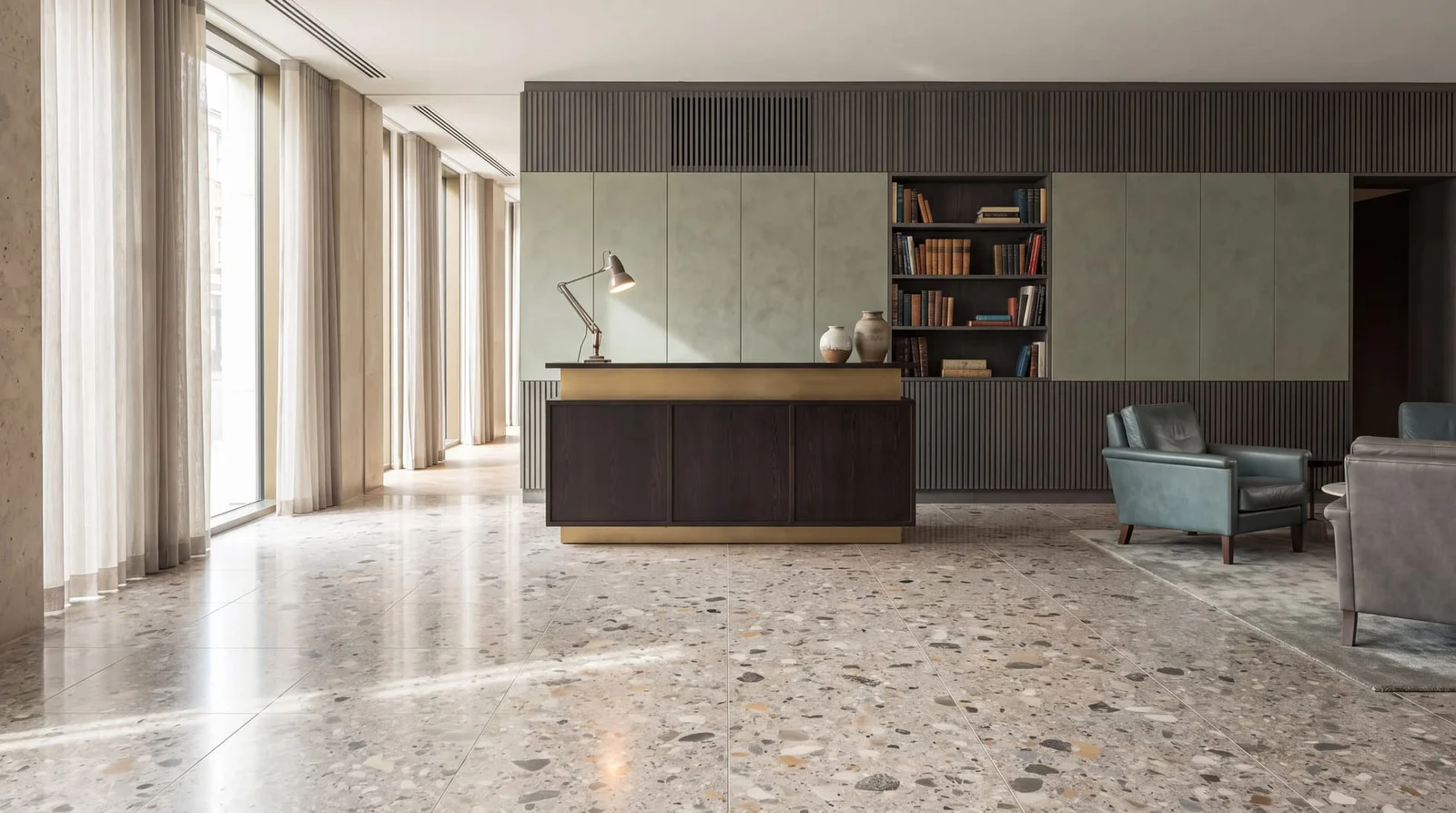
Terrazzo’s character comes from the aggregate set within its binder. A worn or uneven finish can make that detail look flat, especially in strong daylight or across a large reception floor. Professional polishing refines a suitable surface to improve its clarity and the consistency of its appearance.
The right starting point is an assessment, not an assumption that every floor needs a high gloss. We look at the type of terrazzo, surface wear, previous treatments and any defects that should be repaired before polishing.
A honed, satin or more reflective finish may be appropriate depending on the system and its condition. A test area helps agree an achievable appearance and explain how the floor will need to be maintained.
Understand the condition
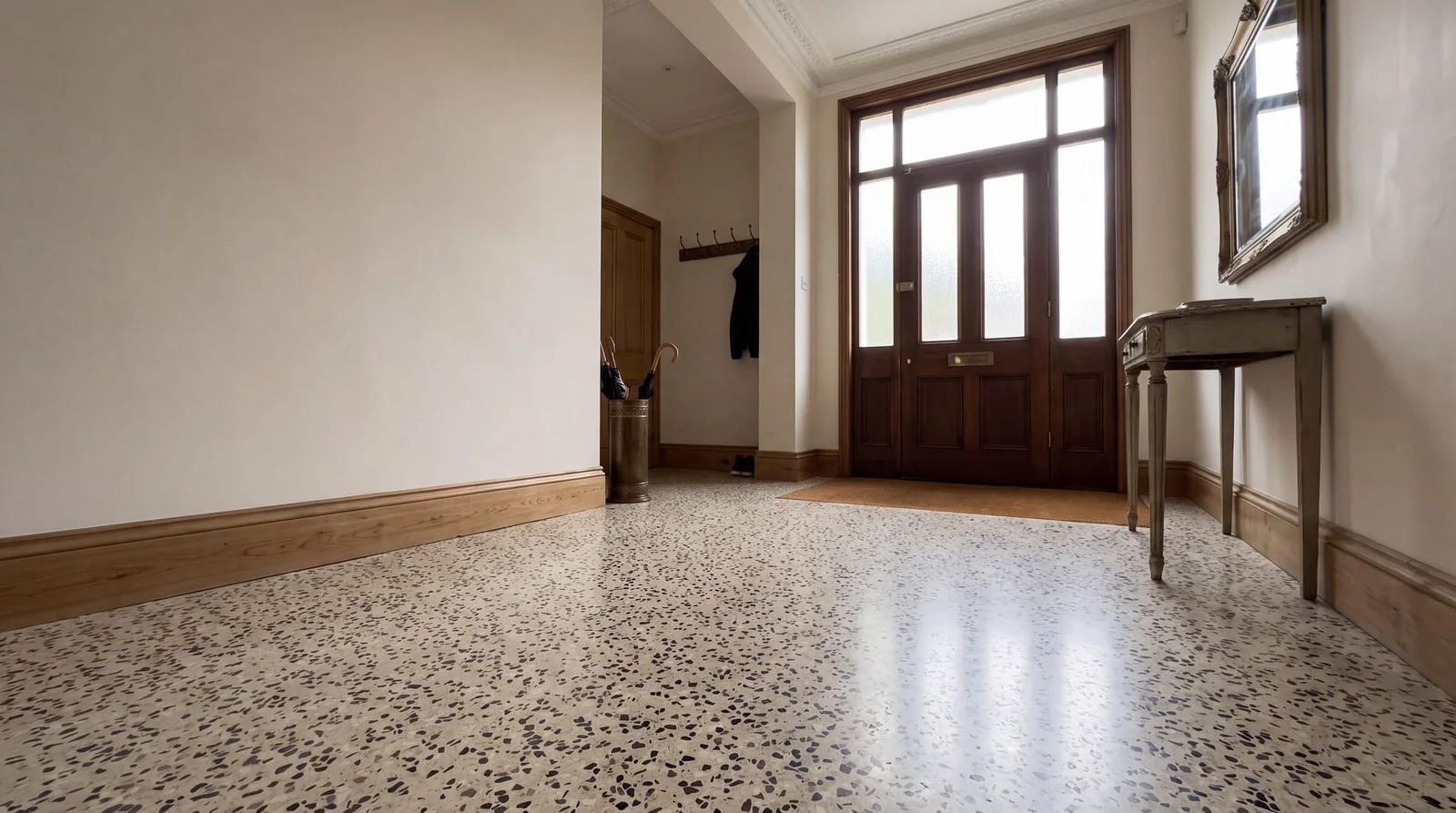
A consistent finish comes from addressing the condition of the surface before the final refinement.
When the floor is sound but its finish has worn, honing and polishing can be assessed as a way to improve clarity. We check for residues and coatings that may be masking the surface first.
Suitable abrasive stages may reduce surface wear before finer refinement. Deeper scratches can require a different starting point and are assessed separately.
A softer finish can suit an understated interior. Its appearance varies with the aggregate, binder and light, so the target finish is discussed against the actual floor.
Progressive polishing can develop a higher level of reflection on a suitable system. We explain what the floor can achieve instead of promising the same gloss on every terrazzo.
The work is scoped to include accessible edges and changes of material. Original borders, metal divider strips and previous repairs can affect the treatment and final appearance.
Protection is selected only where appropriate to the material and finish. A sealer is not a substitute for surface correction or a guarantee against every stain.
Cleaning, polishing or restoration?
These treatments solve different problems. If you are unsure, photographs and an assessment help identify the right starting point.
| What you notice | Likely starting point | What to expect |
|---|---|---|
| Dirt, traffic marks or a residue film | Terrazzo cleaning | Compatible cleaning and residue removal; physical wear may remain. |
| A worn finish or fine surface scratches | Terrazzo floor polishing | Assessment for honing and progressive finish refinement. |
| Chips, cracks, damaged areas or more extensive wear | Terrazzo restoration | A wider scope that may include suitable repairs and surface correction. |
A clear scope before work begins
We assess the terrazzo, condition and use of the space. Photographs start the process; an inspection or trial area may be needed to agree the treatment.
Loose dirt and residues are addressed. Previous coatings and any necessary repairs are assessed before polishing is specified.
A suitable honing stage may be needed to correct wear and prepare the surface. We do not specify unnecessary material removal on a floor that only needs lighter treatment.
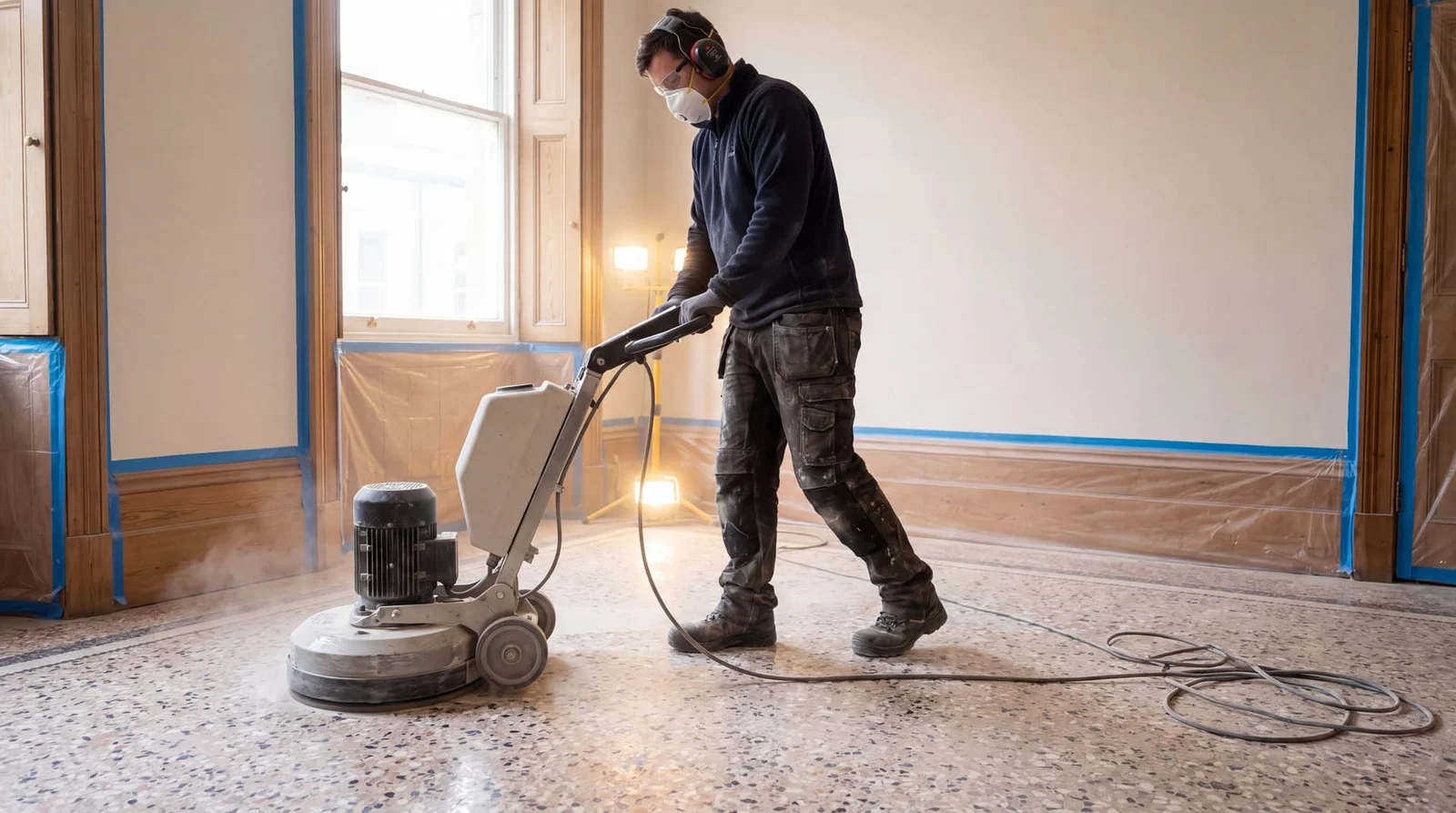
The surface is worked through the appropriate stages to develop the agreed finish. Edges and detailed areas are considered as part of the quoted scope.
The floor is inspected and protection considered where suitable. You receive guidance on use, cleaning and any drying or curing requirements.
Treatment, finish and timescale are confirmed after assessment. No two terrazzo floors respond in exactly the same way.
Homes & commercial spaces
An entrance hall, a residential corridor and a hotel reception have different demands. We discuss the light, level of foot traffic, maintenance arrangements and intended appearance before agreeing a polishing specification.
A reflective finish does not, by itself, establish whether a floor is suitable for a particular slip-resistance requirement. Tell us about any site specification or testing requirement so it can be considered alongside the finish.
If cracks, missing material or significant unevenness are present, the restoration page explains the more extensive work that may be required first. If the issue is simply dirt or a film of residue, cleaning may be the appropriate starting point.
A quote based on the actual floor
Floor area, existing finish, scratch depth, preparation, repairs, accessible edges and site access all influence the quote. The desired finish also affects the treatment sequence. Send photographs and measurements for an initial discussion; we provide a written scope and quote once the requirements are clear.
Discuss your floorUse suitable entrance matting and remove abrasive grit regularly. Clean with a product compatible with the floor and its finish, follow dilution guidance and deal with spills promptly. Tell the maintenance team which treatment has been applied so that unsuitable pads or coatings are not introduced later.
For a wider range of surfaces, explore our floor polishing services or marble and stone services.
London coverage
We serve residential and commercial properties across Greater London, including central London, Westminster, Kensington, Chelsea, Camden, Islington, the City of London and surrounding boroughs. Send your postcode to confirm arrangements for your property.
For your assessment, include the approximate floor area, photographs, property use and any parking, access or working-hour restrictions.
Useful answers before you book
Honing uses suitable abrasive stages to refine and, where appropriate, correct surface wear. Finer polishing stages develop the finish. The sequence depends on the floor’s condition and the appearance agreed after assessment.
Not necessarily. Mechanical refinement and an applied floor coating are different processes. We assess the existing system and explain which treatment is proposed and what maintenance it requires.
Both need a system-specific assessment. Binder, aggregate, existing coating and condition affect the appropriate equipment, products and finish. We confirm suitability before specifying the work.
A less reflective finish may be possible, depending on the terrazzo and its condition. We discuss the target appearance and can use a test area to help you compare the result.
Polishing does not replace missing aggregate or resolve structural movement. Suitable defects may need repair first. More extensive damage belongs in a restoration assessment.
Gloss alone does not determine slip performance. Contamination, moisture, maintenance, the finish and the site’s use all matter. Tell us about any required slip testing or specification before work is scoped.
There is no reliable fixed price without knowing the area, condition, preparation and access. Send photographs and an approximate area so we can advise on the next step towards a written quotation.
Choose cleaning for dirt and residues, polishing for a worn finish on a suitable floor, and restoration for damage that needs repair or more substantial correction. If you are unsure, send photographs and we will assess the appropriate starting point.
Your next step
Show us the whole floor and the areas where the finish looks worn. Include the postcode, approximate area and whether you prefer a softer or more reflective appearance.
We will advise on the assessment needed and the appropriate service before a treatment is agreed.